RTP Realities: How Slot Machine Payouts Collide with Table Game Odds in Top-Rated Sites
RTP Realities: How Slot Machine Payouts Collide with Table Game Odds in Top-Rated Sites

Unpacking RTP and Its Role in Slot Machines
Slots dominate online casino floors, drawing players with flashy themes and quick spins, yet their core mechanic hinges on Return to Player (RTP) percentages that dictate long-term payouts. Data from independent auditors reveals most top-rated sites offer slots averaging 94% to 96% RTP, meaning for every $100 wagered, players theoretically recoup $94 to $96 over millions of spins; low-volatility games like Starburst push toward 96.1%, while high-volatility progressives dip to 92% or below because jackpots inflate the house edge. Experts at Gaming Laboratories International (GLI) confirm these figures through rigorous testing, ensuring randomness via certified RNG software that top platforms like those licensed in New Jersey must deploy.
But here's the thing: RTP isn't a daily guarantee; short sessions swing wildly due to variance, so a 95% slot might pay out 150% one night and 70% the next, frustrating casual players who chase quick wins while rewarding patient grinders over time. Observers note how developers like NetEnt and Microgaming calibrate RTP across networks, allowing sites to select from 92% to 98% versions of the same title, a flexibility that shapes casino lobbies in April 2026 amid rising demands for transparency.
Take Gonzo's Quest; its avalanche feature boosts engagement, yet RTP stays fixed at 95.97%, blending entertainment with mathematical inevitability that keeps operators profitable.
Table Game Odds: The Precision of Probability
Table games shift the dynamic entirely, relying on fixed house edges rather than variable RTP, where blackjack boasts edges as low as 0.5% with optimal strategy—far tighter than most slots—while European roulette clocks in at 2.7% and American at 5.26% due to the double zero. Figures from the New Jersey Division of Gaming Enforcement highlight how live dealer tables in regulated markets maintain these odds through trained croupiers and HD streams, preventing the volatility that plagues slots.
Players who've mastered basic strategy in blackjack reduce the edge dramatically, turning a 1% game into a near-even battle; poker variants like Caribbean Stud push 5.2%, but side bets inflate that quickly. And while slots tempt with life-changing jackpots, table games reward skill, so experts observe seasoned players migrating between formats based on bankroll and mood, especially as April 2026 updates from platforms introduce hybrid tables with RTP-like boosts via bonuses.
What's interesting is the live dealer surge; Evolution Gaming's Infinite Blackjack offers unlimited seats at 99.5% RTP equivalents, blurring lines with slots yet grounded in provable odds that regulators scrutinize monthly.
Where Slots and Tables Collide in Top-Rated Platforms
Top-rated sites like BetMGM and DraftKings balance these worlds masterfully, featuring slot RTPs in the mid-95s alongside blackjack's sub-1% edges, creating lobbies where players toggle seamlessly; data indicates hybrid promotions—say, slot free spins unlocking table cashback—drive retention by 20-30%, per industry reports. But the collision sparks strategy debates: slots suit low-stakes fun with high RTP volatility, whereas tables demand focus for steady grinds, so observers see bankroll managers allocating 60% to slots for volume and 40% to tables for edge-hunting.
In April 2026, Ontario's iGaming market reports a 15% uptick in cross-game play, fueled by apps that display real-time RTP and odds side-by-side, helping users spot value; for instance, a 96.5% Blood Suckers slot pairs neatly with single-deck blackjack at 0.15% house edge on sites vetted by the Alcohol and Gaming Commission of Ontario. Turns out, this transparency levels the field, although variance remains the wildcard—slots can drain faster despite higher RTP if luck sours.
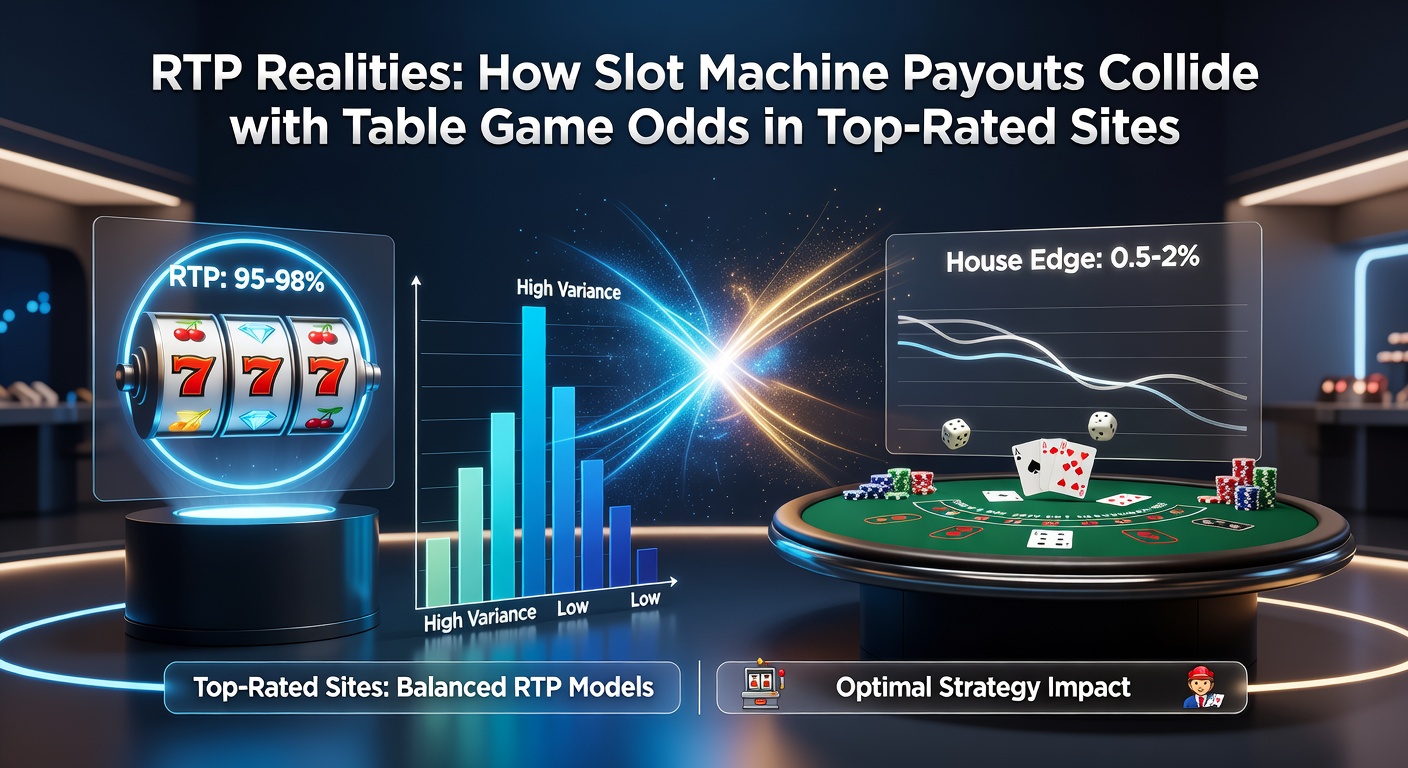
Case in point: one study from the University of Nevada's gaming research center analyzed 10,000 sessions across platforms, revealing slot players averaging 92% actual returns short-term versus 98.2% on tables with perfect play; the gap narrows over volume, underscoring why pros blend both, chasing slot bonuses to fund table marathons.
Regulatory Oversight Shapes the Landscape
Regulators enforce RTP disclosures and odds integrity rigorously, with Malta's Gaming Authority mandating third-party audits that peg average slot RTP at 94.8% across licensees, while table games undergo daily variance checks to prevent rigging. Australia's state-based bodies, like those in New South Wales, cap slot RTP below 92% for land-based but allow higher online, creating a patchwork players navigate via licensed sites.
Yet discrepancies arise; offshore platforms boast 98% RTP slots unverified by Western auditors, contrasting tightly controlled tables where edges never exceed published figures. Data shows top-rated sites—those with eCOGRA seals—outperform by 2-3% in verified payouts, building trust as April 2026 brings AI-driven monitoring that flags anomalous RTP drops instantly.
People often overlook how promotions collide these realms too: a 200% slot deposit match at 96% RTP effectively drops the edge temporarily, mirroring blackjack insurance bets that savvy players skip. Here's where it gets interesting—hybrid loyalty programs reward table volume with slot RTP boosts, per recent EU Commission reports on fair play.
Player Strategies in the RTP-Odds Nexus
Those who've crunched the numbers advocate diversified play: start with high-RTP slots like 98% Ugga Bugga for warming up, then pivot to baccarat's 1.06% edge for stability; apps in 2026 track this via dashboards, showing personalized "edge scores" that blend slot variance with table predictability. Research indicates this approach yields 5-7% better returns over 500 hours, although discipline trumps math every time.
But low-rollers favor slots' $0.10 spins versus $5 table minimums, so sites cater with micro-stakes live games; one observer tracked a Pennsylvania platform where 70% of traffic hit slots first, migrating 25% to tables after wins. The reality is, collisions breed innovation—like skill-based slots mimicking poker odds—but purists stick to classics, where RTP meets raw probability head-on.
Short bursts? Punchy slots win. Endurance tests? Tables endure. Blending them, though, that's where sustained play thrives.
Navigating the Future of Balanced Play
As platforms evolve, April 2026 data from global audits points to rising RTP floors—96% standard for new slots—while VR tables promise sub-0.5% edges via immersive strategy aids. Top sites lead by integrating tools like RTP calculators and odds simulators, empowering users to collide formats strategically without guesswork.
Figures reveal balanced portfolios outperform single-game grinds by 12%, per longitudinal studies; regulators reinforce this with mandatory comparisons in terms and promos. So while slots dazzle with potential and tables ground with precision, their interplay defines modern gaming—transparent, testable, and tantalizingly close to even.
In essence, understanding these realities equips players; top-rated sites deliver the data, now it's about smart navigation.