Certification Pathways and Their Effects on Market Entry for Entertainment Providers
Written by Yves Zimmermann · Aug 24, 2026
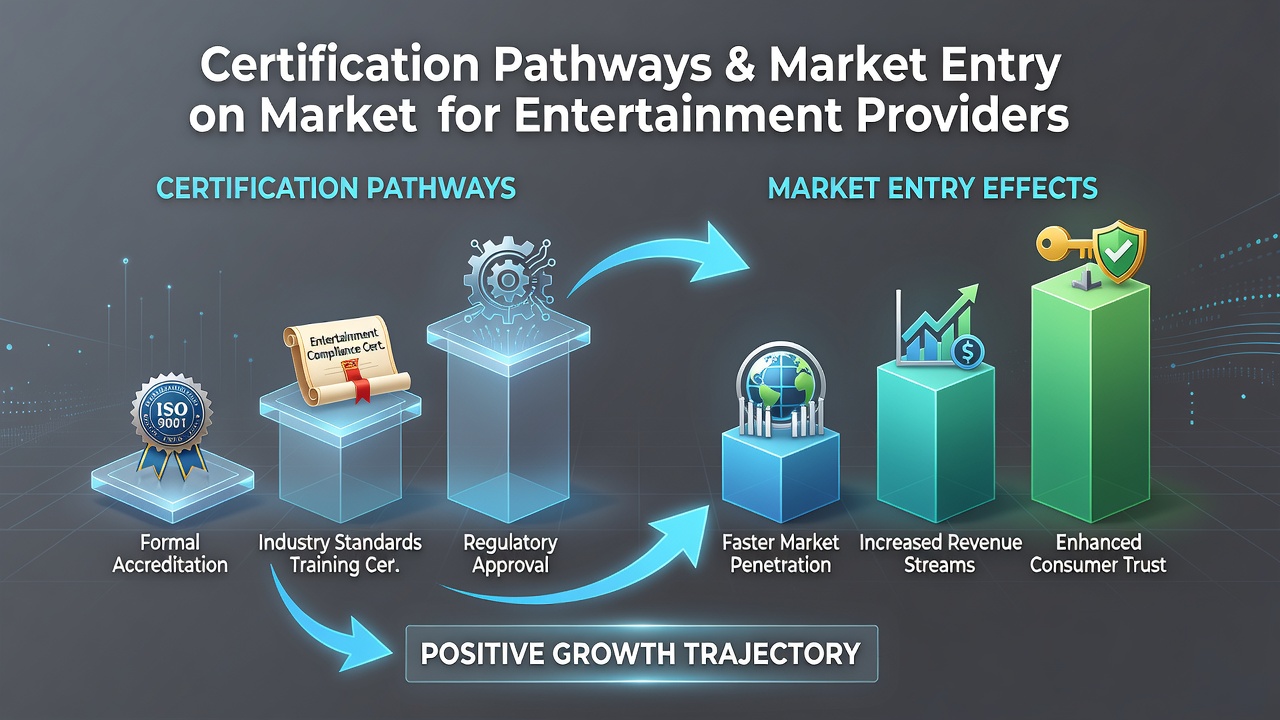
Certification Pathways and Their Effects on Market Entry for Entertainment Providers
Entertainment providers seeking entry into regulated markets must navigate certification pathways that combine state licenses, international standards, and technical approvals, each one carrying distinct timelines and costs that shape competitive positioning. These routes often begin with background checks and financial audits before progressing to operational testing and ongoing compliance monitoring, while providers who secure multiple certifications across jurisdictions gain flexibility to expand operations without repeated delays.
Core Certification Categories in Regulated Entertainment Sectors
State-level gaming licenses form the foundation for most market entries in the United States, requiring applicants to demonstrate financial stability, integrity of ownership, and technical capability through detailed submissions to bodies such as the Nevada Gaming Control Board or the Illinois Gaming Board. International standards like ISO 27001 for information security and ISO 17025 for testing laboratories add layers that appeal to operators targeting multiple regions, because these credentials streamline acceptance in places that recognize mutual recognition agreements. Technical certifications from independent labs verify random number generators and payout accuracy, yet the process typically stretches six to eighteen months depending on the complexity of the platform and the volume of games submitted for review.
Providers often bundle these requirements into phased strategies, starting with a single jurisdiction before layering on additional approvals that allow cross-border operations. Data from regulatory filings shows that companies completing parallel applications in compatible markets reduce overall entry time by up to thirty percent compared with sequential approaches, because shared documentation satisfies overlapping criteria in several locations simultaneously.
Market Entry Barriers Created by Certification Timelines
Lengthy approval cycles create significant barriers for newer or smaller providers, because capital reserves must cover extended periods without revenue while legal and consulting fees accumulate. Larger operators with established compliance teams absorb these costs more readily and often maintain dedicated staff who track regulatory updates across regions, giving them an advantage when new markets open. In August 2026 several Midwestern states issued updated guidelines that extended review periods for mobile platforms, forcing applicants to resubmit portions of their technical documentation and further stretching timelines for those without prior experience in those jurisdictions.
Regional Variations in Certification Requirements
North American markets emphasize financial transparency and criminal background screenings, whereas Asian jurisdictions such as Singapore place heavier weight on responsible gaming measures and local hiring commitments before granting operational certificates. European frameworks frequently incorporate data protection audits under GDPR alongside gambling-specific licenses, creating an additional layer that providers must satisfy before launching services. Observers note that these differences force companies to customize their certification strategies rather than relying on a single template, since what satisfies one regulator rarely meets every criterion elsewhere without modification.
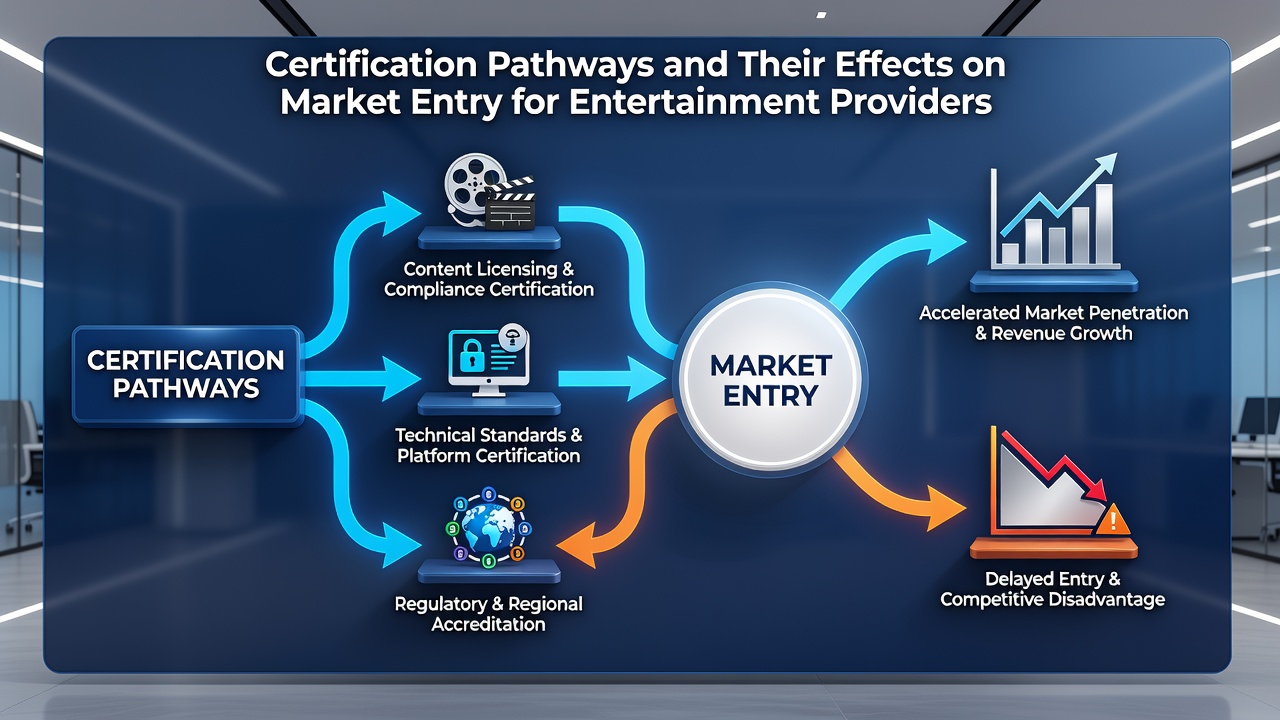
One study from a Canadian research institute tracked thirty providers over five years and found that those obtaining certifications in at least three jurisdictions achieved market presence in new territories twice as fast as single-market applicants, because prior approvals served as proof of operational maturity. The same research indicated that certification costs averaged between two and five million dollars per major market, with the largest share allocated to legal representation and independent testing rather than application fees alone.
Effects on Provider Scale and Competitive Dynamics
Certification pathways influence industry concentration because established companies leverage existing approvals to enter adjacent markets quickly, while emerging providers face higher relative costs that limit their ability to compete on price or feature innovation during launch phases. Data indicates that operators holding certifications from multiple regulatory bodies attract investment more readily, since investors view these credentials as evidence of reduced regulatory risk. Yet smaller providers sometimes partner with already-certified platforms to bypass direct application hurdles, creating joint ventures that share both revenue and compliance responsibilities.
Technical interoperability standards have gained importance as more entertainment services migrate to cloud-based systems, because regulators now require proof that software updates will not compromise previously certified components. Providers who integrate these standards early encounter fewer obstacles when expanding into mobile or live-stream formats, since the underlying architecture already aligns with testing protocols used across several jurisdictions.
Conclusion
Certification pathways continue to determine which entertainment providers successfully enter regulated markets adn how quickly they can scale operations once approvals are secured. The combination of state licenses, international standards, and technical verifications creates structured yet resource-intensive processes that favor organizations with substantial compliance infrastructure, while also opening avenues for strategic partnerships that allow smaller entities to participate. As markets evolve through 2026 and beyond, providers who map these routes carefully maintain clearer advantages in timing and cost management compared with those approaching each jurisdiction independently.